Kurt Campbell, the White House Asia Coordinator, said that in his view India is the most important bilateral relationship for the United States in the 21st century.

It was clear in Brunei at the 8th East Asia Summit that China doesn't want the South China Sea issue to even dominate the discussion, reports Sheela Bhatt, who is part of the prime minister's media contingent to the summit

India, Japan and the US are set to focus on "anti-submarine warfare" by deploying "different machines" during the next round of their marine wargames named the Malabar Exercise, amidst increasing presence of Chinese underwater vessels in the strategic Indian Ocean region.

He warned that Pakistan-supported terrorist groups would continue to carry out attacks inside India.

The Taiwanese foreign minister said the time has come for all democratic countries to find ways to deal with China's expansionist agenda and its military muscle flexing, especially in the maritime domain.

The annual threat assessment of the US Intelligence Community released by the Office of Director of National Intelligence (ODNI) also said that the 'expanded military posture by both India and China along the disputed border elevates the risk of armed confrontation between two nuclear powers that might involve direct threats to US persons and interests and calls for US intervention'.

India is increasingly a willing participant in the evolving US' Indo-Pacific strategy. While these developments are related to the perception of a growing Chinese security challenge, their implications for India's much-vaunted strategic autonomy should be a matter of deeper and closer reflection, asserts former foreign secretary Shyam Saran.

Blinken will also attend a meeting of the foreign ministers of the Quad grouping and will hold bilateral talks with his Indian counterpart S Jaishankar in Delhi.
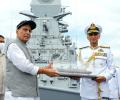
Taking a dig at China, Defence Minister Rajnath Singh on Sunday said 'some irresponsible nations' with their narrow partisan interests and hegemonic tendencies are coming up with wrong definitions of the UN Convention on the Law of the Sea.

The US actions can be seen as a riposte to India's neutral position on the Ukraine crisis, its continuing import of Russian arms and oil thus undermining Western sanctions, argues Colonel Anil A Athale (retd).

Modi said both sides expressed commitment for an open, efficient and rules-based regional architecture and to expand bilateral maritime cooperation further.

As China tries to gain a foothold in the Indian Ocean region, Prime Minister Narendra Modi on Thursday said India recognised that there are other nations around the world, with strong interests and stakes in the region.

'India does not wish to remain silent in improving its strategic space so that its leverage to counter China's expansionist designs is maintained, besides enabling it to play a responsible role from a position of strength for peace and stability in Asia,' points out Dr Rajaram Panda.

An India-Japan joint statement said the two leaders expressed serious concern over the conflict and the unfolding humanitarian crisis in Ukraine.
The report said that Indian officials believe China is trying to contain India by forcing it to divert more resources into defending simultaneously both its western border with Pakistan and eastern flank with China and by weakening its willingness and ability to challenge Chinese ambitions to dominate the region.

In a major policy speech on Monday, US Secretary of State Mike Pompeo said the world will not allow China to treat the strategically important South China Sea (SCS) as its 'maritime empire' and vowed to support worried Southeast Asian countries against Beijing's 'campaign of bullying' to control the resource-rich region.

In his opening remarks at a ministerial meeting in Tokyo of the Quadrilateral coalition, also known as 'Quad', External Affairs Minister S Jaishankar said India remained committed to a rules-based world order, respect for territorial integrity and sovereignty, and peaceful resolution of disputes.

Vietnam is a key player in India's act east policy under Prime Minister Narendra Modi. From India's perspective, a strategic partnership with Vietnam will only deepen political, economic, and security ties and be a bulwark against China, say Melissa S Hersh and Dr Ajey Lele

The Australian High Commissioner had said Australia remains deeply concerned by Chinese actions in the South China Sea that are 'destabilising and could provoke escalation'. In a tweet, the Chinese envoy took objection to his remarks and said they were made 'disregarding facts'.

In a strong message to China, India and ASEAN on Thursday called for a "full and effective" implementation of the understanding between the parties involved in the South China Sea dispute, while stressing on maritime security and freedom of navigation in the critical sea lanes.

The Indian Navy has deployed a range of its frontline warships and submarines in the Indian Ocean region to send a clear message to China following the escalation of the border dispute in eastern Ladakh.
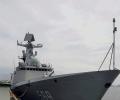
China's Navy wants to join hands with India to maintain security of the Indian Ocean

The memorandum of understanding on mutual logistics support is the first such major agreement that Vietnam has signed with any country.

US Vice President Kamala Harris would host a separate meeting with the prime ministers of three Quad countries -- India, Australia and Japan -- at the White House to discuss with them the important factors for democracies to go forward, officials said.

During their talks, the two leaders decided to significantly expand their ties in several key areas including defence, trade, energy and education.

Bangladesh hopes to procure a submarine to boost the capabilities of its navy, Prime Minister Sheikh Hasina said at an event marking the induction of two patrol aircraft and three warships.

At least 38 Indian fishermen have been arrested by Pakistan maritime officials for allegedly violating territorial waters in the Arabian Sea, police said on Thursday.

Hailing India for keeping "neutral stand" over the South China Sea issue despite pressure from the US and Japan, state-run Chinese media on Wednesday said there are some contradictions and frictions between the two nations but the overall bilateral relations have been developing smoothly.

The US, he said, rejects any Chinese claim to waters beyond a 12-nautical mile territorial sea derived from islands it claims in the Spratly Islands (without prejudice to other states' sovereignty claims over such islands).
India is witnessing trailers of future conflicts and its adversaries will continue with efforts to achieve their strategic aims, Army Chief Gen MM Naravane said on Thursday delving into national security challenges emanating from China and Pakistan.

In a surprise move China's State Oceanic Administration (SOA) announced that a maritime surveillance fleet consisting of two patrol vessels, Haijian 50 and Haijian 66 started patrolling the waters of the Diaoyu Islands since Friday

There's still little indication of forward movement in Indo-US defence relations.

Prime Minister Narendra Modi along with his counterparts from Australia and Japan on Friday attended the first in-person meeting of Quad leaders hosted by US President Joe Biden during which they plan to discuss issues like climate change, Covid-19 pandemic and challenges in the Indo Pacific, amidst China's growing military presence in the strategic region.

New Delhi has reached out to neighbours like seldom before while singling Islamabad for criticism at international forums.
Seven Chinese warships, including two destroyers, were sighted on Tuesday in waters off a Japanese island, according to the defence ministry, as tension mounted between the two Asian giants over territorial disputes. The naval ships passed the contiguous zone, a band of water just outside Japan's territorial waters, which are governed by international maritime law.
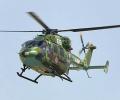
The Southeast Asian nation has been focusing on modernising its military in the face of myriad security challenges as well as decades-long territorial disputes with China in the South China Sea.

The navy has significantly expanded its deployment in the Indian Ocean Region deploying a plethora of warships and submarines to create pressure points on China as the maritime space around the Malacca Strait is very critical for its supply chain through sea routes.

India has sent a letter of request to the United States seeking to purchase patrol drones for protection and vigilance of its maritime assets in the Indian Ocean, sources said.

Colombo seems to be veering to the middle path between China and the US on global matters, but in regional matters of strategic security, it is increasingly identifying with India, points out N Sathiya Moorthy.

To threaten China and Pakistan, and then to sharply cut back on military funding, bespeaks a remarkable trust in Beijing and Islamabad that is not borne out by anything they say or do, notes Ajai Shukla.
